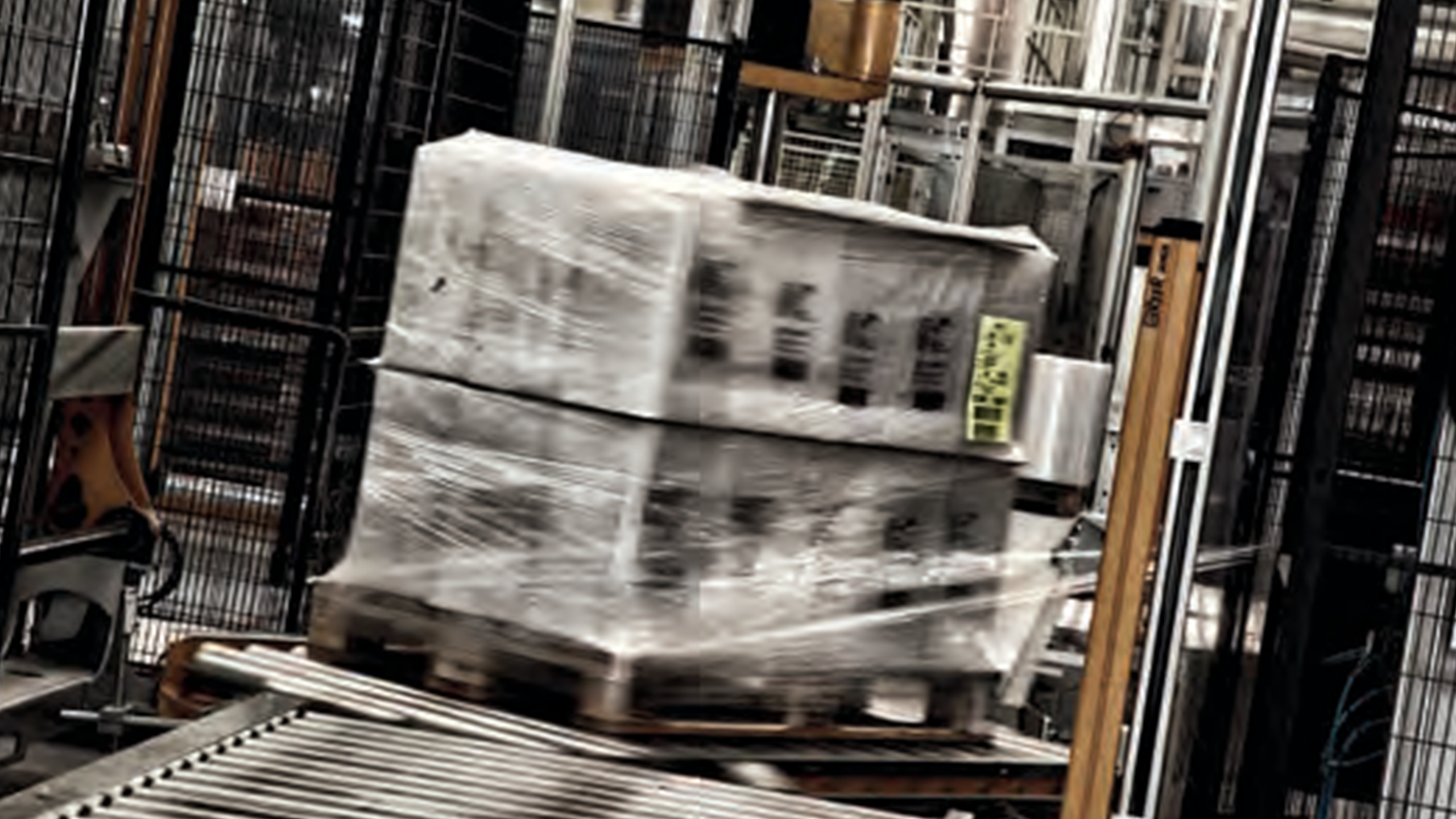
Reducing stretch film consumption does not have to mean compromising load stability. The right combination of film, stretch wrapping machine and intelligent control technology can reduce the amount of material used on every pallet while maintaining – or even improving – load security.
Why reduce pallet wrap use?
There are three key reasons to look at how much stretch film you are using.
1. Reduce packaging costs
Stretch film is a direct consumable cost. Reducing material use, for example by optimising the wrapping cycle, will therefore reduce associated cost.
2. Reduce plastic waste
Using less film means less packaging material being placed on the market and, ultimately, less waste to manage through the supply chain. This can support wider corporate sustainability and resource-efficiency objectives.
3. Reduce your packaging obligations and costs
The UK’s Extended Producer Responsibility (EPR) regulations make the weight of packaging used an increasingly important consideration.
Organisations within scope have to report packaging data, while large producers also have recycling obligations and waste disposal fees. Reducing the amount of stretch film used therefore has the potential to reduce the quantity of plastic packaging you need to report and the associated costs.
How can you reduce film consumption without creating unstable pallets?
1. Start with the material: choose a film designed to do more with less
Not all stretch film is the same.
Traditional stretch film can be used effectively, but newer high-performance and high-stretch materials can deliver the required load containment using considerably less material.
However, maximum stretch is not the same as maximum performance. The objective is not simply to stretch the film as far as possible. The film, machine and wrapping programme need to work together to deliver the right combination of:
- Film thickness
- Stretch capability
- Holding force
- Puncture and tear resistance
- Tension
- Number of wraps
- Load containment
This is where choosing the right material for the application becomes particularly important.
Standard automatic stretch films in different pre-stretch levels, high-performance and pre-stretched films are all available. There is also an opportunity for downgauging – reducing film thickness while maintaining the required performance, by selecting high performance film.
The important point is that changing film should not be treated as simply buying a thinner roll. The film needs to be matched to the wrapping equipment and the load.
2. Choose a stretch wrapping machine that can handle high-performance film
The machine applying the film is just as important as the film itself.
A machine that can only apply conventional film within a limited stretch range may prevent you from taking advantage of newer, higher-performance materials.
When reviewing a stretch wrapping machine, look for:
High pre-stretch capability
A machine capable of high and variable pre-stretch can extract more performance from the film before it reaches the pallet.
YPS offers pallet wrapping machines with stretch ratios of up to 500%, depending on the machine and configuration. Our semi-automatic range includes rotating arm machines capable of handling stretch ratios up to 300%, while our robotic wrappers can offer up to 500% stretch. Fully automatic models are available with stretch capabilities up to 400%.
This gives businesses greater scope to match their wrapping process to high-performance films.
Adjustable film tension
The machine should allow the amount of tension applied to the film to be controlled accurately.
Too little tension can result in a loose or unstable pallet. Too much can deform products, damage packaging or cause the film to break.
Advanced machines allow tension and stretch settings to be adjusted to suit the characteristics of the load.
Programmable wrapping cycles
Different products do not necessarily need the same wrapping recipe.
A pallet of stable cardboard boxes may require a very different treatment from an unstable load containing irregularly shaped products.
Look for a machine that allows operators to save and select wrapping programmes, with control over factors such as:
- Number of wraps
- Film tension
- Pre-stretch
- Wrapping speed
- Film overlap
- Reinforcement around particular areas of the pallet
YPS machines offer pre-programmable wrapping cycles, while some models incorporate smart wrapping technology that can optimise film distribution during the wrapping process.
Load-specific wrapping
The most efficient wrapping system is not necessarily the one that puts the least film on every pallet. It is the one that puts the right amount of film in the right places.
For example, an unstable load may need additional reinforcement around its base or at specific points, while a more stable load may not need the same number of wraps throughout.
Some models offer options such as film roping, which concentrates film into a narrower band to increase containment and stabilisation where it is needed. Look out for machines with flexible options where pallet loads differ.
3. Use technology to understand – and reduce – film consumption
One of the biggest opportunities for reducing stretch film usage is knowing exactly what is happening during the wrapping process.
The latest technology collects and processes data from connected stretch wrapping machines, allowing users to monitor machine performance. It can provide information on productivity, machine stoppages and operating performance, while also supporting machine-cycle improvements. This allows the identification of consumption cost savings and improved load stability.
For a business looking to reduce film consumption, this creates the opportunity to move from assumptions to measurable improvements.
Specifically, it can identify opportunities to:
- lower film micron;
- increase stretch capacity; or
- reduce the number of wraps.
Rather than setting a wrapping programme once and leaving it unchanged for years, manufacturers can use actual production data to continually optimise the process.
The combination is what makes the difference
Reducing pallet wrap consumption is rarely about finding a single ‘magic’ film.
The biggest gains come from treating the wrapping process as a complete system:
Film + machine + wrapping programme + data = optimised pallet wrapping
A high-performance film will only deliver its full potential if the machine can apply it correctly. A sophisticated machine will not deliver maximum savings if it is running an unsuitable film or an unnecessarily generous wrapping programme. And without data, it can be difficult to identify where further improvements are possible.
YPS supplies stretch wrapping machines from leading manufacturers including Robopac and TOSA, with solutions ranging from semi-automatic turntable and rotating-arm machines to robotic and fully automatic pallet wrapping systems. The range includes machines capable of high stretch ratios, programmable wrapping cycles and technologies designed to optimise film use.
YPS has also demonstrated the benefits of high-stretch wrapping in real applications. Take a look at our case studies for examples.
How much could you save?
The answer depends on your existing film, machine, wrapping recipe, pallet profile and production volume.
But if you are currently using more film than necessary, there may be several opportunities to reduce consumption:
- Assess the film you are currently using.
- Measure how much film is actually applied to each pallet.
- Check the pre-stretch capability of your wrapping machine.
- Review the number and distribution of wraps.
- Test high-performance or higher-stretch films.
- Use machine data to identify further optimisation opportunities.
- Validate every change against load stability and transport requirements.
The goal should not be to use the absolute minimum amount of stretch film. It should be to use the minimum amount that reliably delivers the required load stability and protection.
This delivers a much more sustainable approach – reducing cost and material consumption while continuing to ensure that pallets arrive at their destination securely.
Looking to reduce your pallet wrap consumption?
YPS can assess your current wrapping process, recommend suitable stretch wrapping equipment and help identify opportunities to reduce film consumption through the right combination of machine technology and material.
Explore the YPS stretch wrapping machine range for semi-automatic, robotic and fully automatic pallet wrapping solutions, and our stretch wrap materials range for the latest in consumables, or speak to the YPS team about optimising your current pallet wrapping operation.
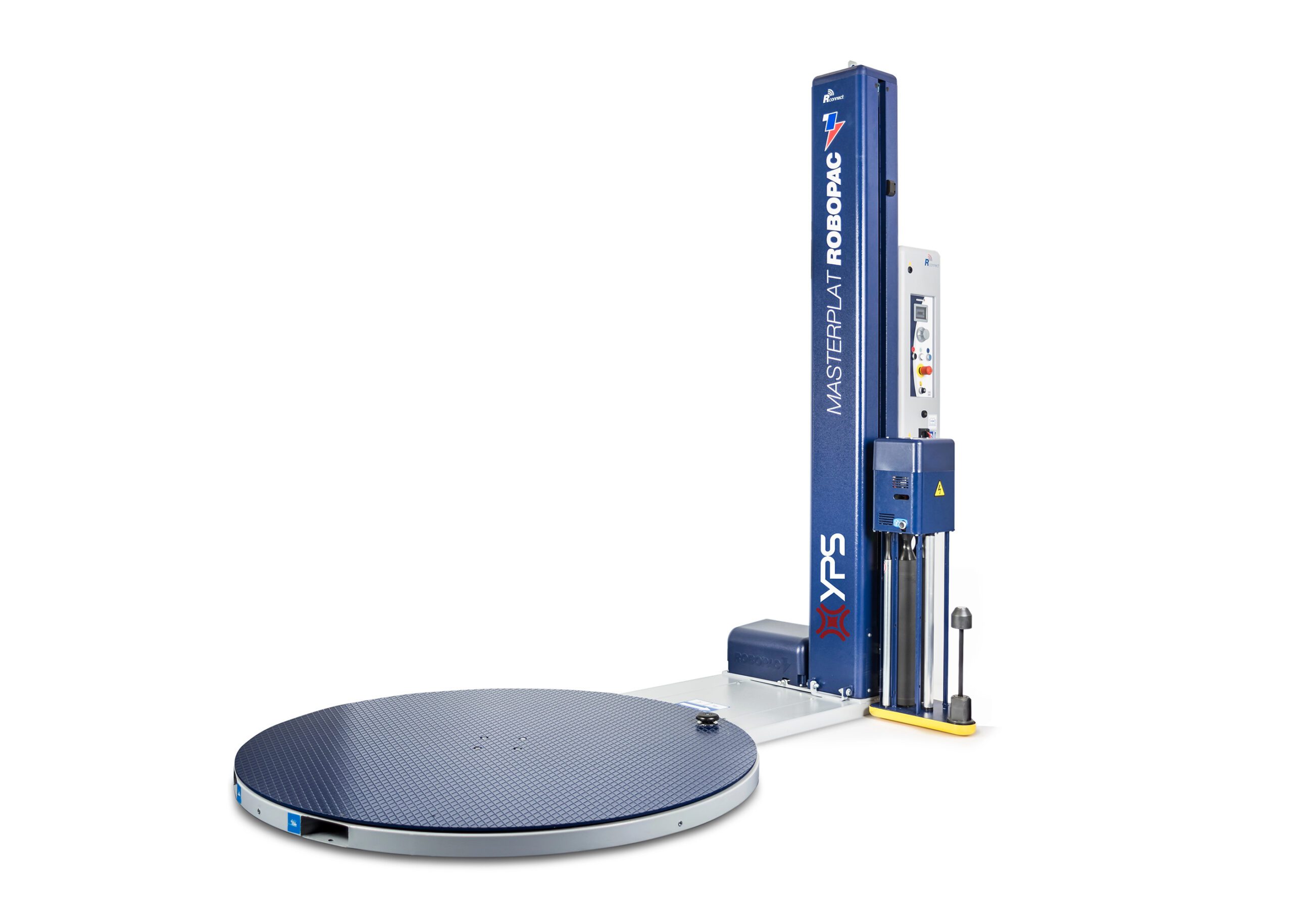
Semi automatic pallet wrappers, including rotating arm, turntable and self-propelled robot models. A huge range of optional features to tailor your system to your needs.
- Stretch ratios up to 500%
- Pre-programmable wrapping cycles
- Easy to control with intuitive operating system
- Safe and simple loading routines
- Options to suit different warehouse configurations
FREQUENTLY ASKED QUESTIONs
Find out more about stretch wrapping by reading the Frequently Asked Questions we’ve compiled.
Accordion Content
The stretch ratio describes how far the film can be stretched from its original length.
For example, a film capable of 250% stretch can, in simplified terms, be stretched to around three-and-a-half times its original length, depending on how the manufacturer defines and specifies the stretch performance.
This is important because the more effectively the film can be stretched during application, the more pallet coverage can be achieved from a given quantity of film.
A semi-automatic pallet wrapper is ideal for businesses wrapping lower to medium volumes. An operator positions the pallet, attaches the film and starts the cycle, making it a cost-effective solution for many operations.
A fully automatic pallet wrapper is designed for higher throughput. It integrates into your production line, automatically wrapping pallets with little or no operator involvement.
As a general guide:
✔ Lower to medium volumes → Semi-automatic
✔ Higher volumes or continuous production → Fully automatic
Here are five signs your business has outgrown hand wrapping.
1. You’re wrapping more than 20–30 pallets a day
2. Your stretch film costs keep increasing
3. You’re experiencing damaged pallets in transit
4. Hand wrapping is creating health and safety concerns
5. You can’t accurately measure your packaging costs
The YPS Team can help you identify where you could reduce film usage, improve load stability, and see whether automation would deliver a genuine return on investment.