The new EPR regulations were recently introduced by the UK Government. Below is a quick guide that explains why they were introduced and what you will need to do to comply,
EPR - AN OVERVIEW
The new Extended Producer Responsibility (EPR) regulations in the UK place responsibility for the costs of managing packaging waste onto the producers who are placing that waste into the market.
The overall aim of the legislation is to reduce the country’s environmental footprint by encouraging greener practices such as increasing the use of sustainable materials, improving recycling and reducing total waste.
The changes not only place regulatory responsibility on applicable businesses but offer an opportunity to other businesses to use the process and framework to review their own practices and look for improvements in their environmental impact. Acting within the framework now helps businesses to be fully prepared for a time when the regulations may apply to them.
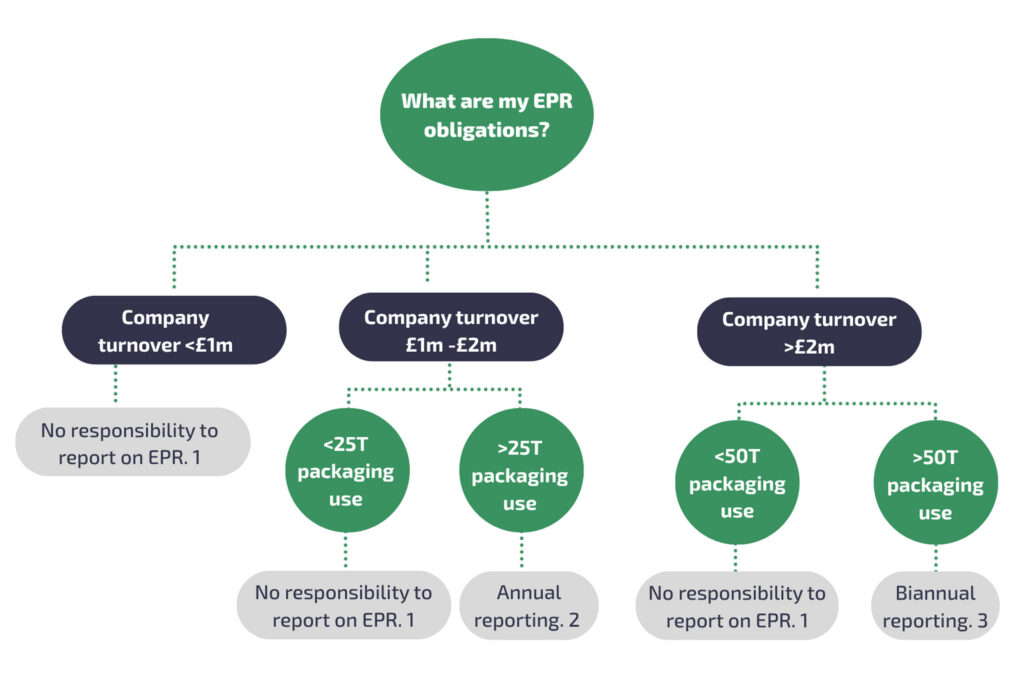
what are my epr obligations?
Follow the decision tree above to understand your EPR reporting obligations. The details of each reporting level are explained below.
No responsibility to report on EPR – there is no current legal obligation to report, however there is still an opportunity to review materials use, to save cost and waste and to prepare for a time in your company’s growth when EPR will be required.
Annual reporting – Producers must register with the environmental regulator. Report must be made by 1st April for the previous calendar year’s use, although no EPR fees will apply. The report must include data on packaging activity, class, material and waste.
Biannual reporting – Producers must register with the environmental regulator. Report must be made by 1st October for January–June activity that year and by 1st April for activity July-December of the previous year. EPR fees will apply. The report must include data on packaging activity, class, material and waste.
The reporting in all areas should be by weight, in KGs.
Packaging class
There are four types of packaging class, by which the packaging used must be categorised:
Primary– packaging around a single sales unit
Secondary – packaging grouping a number of sales units
Tertiary – pallet level packaging
Shipment – outer or transit packaging supplied to households
How can YPS help?
To help our packaging materials customers with their EPR reporting, the YPS Team can assist in the following ways:
Data & information – we can supply information on our full range of materials, ready for your EPR reporting obligations
Recyclability information – to further assist in making EPR-friendly materials selections
Downgauging opportunities – YPS offers exclusive, high-strength materials allowing for downgauging which results in reduced overall material consumption
Packaging material reviews – our experienced team can help you to review your use along with available materials for ongoing improvements and EPR fee reductions
Get in touch today to discuss how YPS can support your EPR reporting and EPR fee obligations.
find out more
Our team of packaging experts would love to hear from you – if you’re looking for information about our materials, advice on alternative consumables or you’d like to talk through your EPR obligations, then please get in touch.