Why think about maintenance when you first purchase a new shrink wrapping machine? Because good maintenance protects uptime, seal quality, film performance and machine life, ensuring the highest quality packaging over the longest possible time.
So, what’s the best way to look after your automated shrink wrapping equipment? Here are some top tips from our engineering team, who specialise in helping our customers to service, maintain and optimise their packaging machinery:
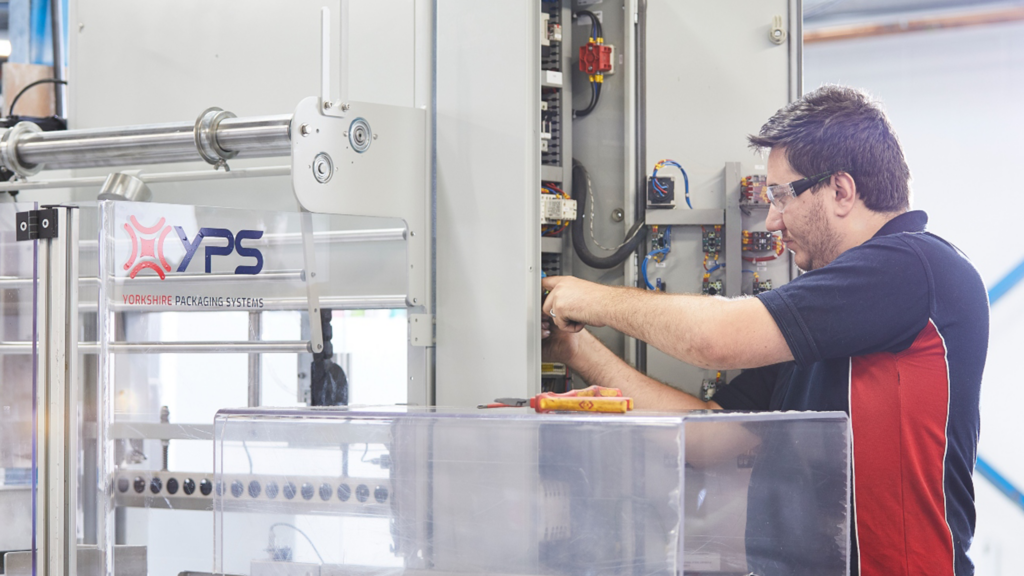
Schedule preventative servicing
A planned maintenance schedule delivers many benefits:
- Planned servicing is easier to manage than unexpected breakdowns.
- Worn components can be identified and changed before they fail and cause unnecessary and unexpected downtime.
- The cost of a service visit, if a cost is applied, is significantly lower than the cost of lost production caused by an unexpected failure.
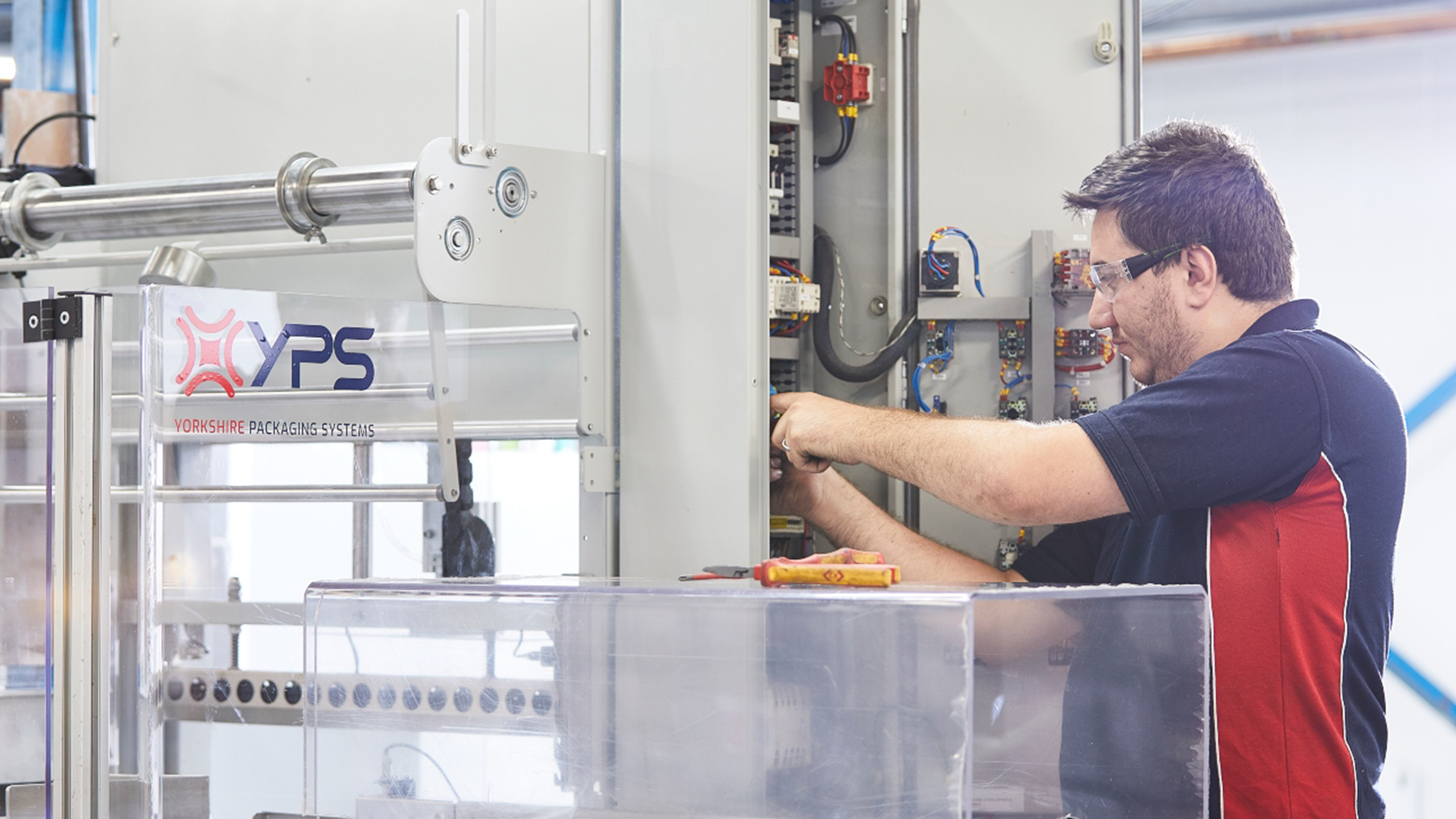
At YPS, we believe that servicing is so vital that we include a free service contract with every machine sale. Further service contracts, and contracts for non-YPS-supplied equipment, can also be arranged.
While service visits can be arranged as needed, our Engineering Team will recommend a schedule that takes account of your anticipated throughput as well as the machine manufacturer’s advice to create a personalised schedule that is optimal for your production environment.
Conduct routine inspections, cleaning and maintenance
Inspections, cleaning and maintenance should be baked-in routines, that don’t need to wait for a full service visit.
What does a good routine consist of for each element of the automated shrink wrapping line?:
- Cutting and sealing system: keep the sealing bar clean, removing all debris; check blades for wear or damage; check sealing temperature and dwell time; examine finished packs for weak seals, incomplete cuts or excessive scorching.
- Shrink tunnel: keep the tunnel clean and free from film; check fans and air circulation; inspect heaters and temperature sensors.
- Sensors and safety systems: regularly test product sensors; keep them clean and aligned; check emergency stops and guards; check these particularly after other checks and cleaning routines have been carried out.
- Conveyors and other moving parts: check for wear, tracking and tension; inspect rollers, chains, bearings and other moving components, ensuring they can move freely; lubricate using manufacturer recommended specifications; be aware of unusual noises, vibration or resistance.
Overall, checking that settings remain as agreed and consistent is also important. It’s tempting to alter settings to ‘tweak’ the performance of the machine but this may hide a mechanical issue that ultimately will need to be properly addressed. Checking the current settings against standard operating procedures will flag if changes are being made, allowing engineers to understand how the machine may be operating differently.
Great everyday practise can prevent issues or highlight any that arise as early as possible so that they can be dealt with before a breakdown is likely to occur.
Monitor performance and output
Rather than simply checking over the machine in question, reviewing performance and output can also be vital in picking up any issues.
Encourage operators to watch for changes which may be an indicator that a part needs to be changed. Examples of these changes are:
- Increasing film consumption
- Slower cycle times
- Product jams
- Temperature fluctuations
- Unusual noise or vibration
Equally, ensuring that the output is consistent is helpful in making sure that no maintenance issues are present. Having an example of an ideal pack to hand, or pictures of one, is a simple aide to checking and rechecking that the required pack standard is being achieved.
Ensure operators are well-trained
Making sure your operators know how to use the machine properly is the key to avoiding a lot of faults and potential damage. They are key to ensuring that the above cleaning, maintenance and monitoring routines are carried out correctly.
YPS is committed to ensuring the machines we supply are operated at their best by our customers once they’re installed. Unlimited, comprehensive training is delivered free of charge by our engineering team at every YPS machinery installation.
To support your operators, we also recommend having a copy of the detailed machine manual readily available as a point of reference – this can be easily and safely stored inside the electrical cabinet. Electronic and paper copies of manuals are supplied with every machine. For some models, videos of key processes are available from the user-friendly HMI, so they’re always on hand.
Run compatible, high-quality films
Purchasing cheaper films is always a false economy when it comes to getting the best from your shrink wrapping equipment and the best pack quality.
Using high-end films reduces costs in production through reduced temperatures in the tunnel and faster seal times, translating into greater production rates. In addition, high-end films also reduce the build-up of film caught along the sealing jaw/blade which will not only produce poor seals on your packs but will affect the lifespan of the part.
High-quality films can include the latest Ultra-Thin Technology. This means the gauge is reduced compared to conventional films, without any sacrifice to their properties. The thinner micron films can be run at lower temperatures and therefore significantly reduce the output pressure on the sealers and shrink tunnels over time, whilst also removing the potential for damage caused by scorching or blistering.
Use genuine manufacturer or recommended parts
Some machine parts will inevitably experience wear and tear and require replacement from time to time.
To ensure that downtime is kept to a minimum, we’d recommend keeping critical spare parts available. For your convenience, we supply dedicated spare parts lists with every machine that categorise parts according to the frequency they will need to be changed. Category A denotes a part we suggest is kept on-site at all times. In addition, YPS keep consumables and many spare parts in stock at our UK HQ, for fast delivery when needed.
Overall, poor-quality replacement parts may reduce reliability or create further problems. To avoid this, we’d recommend checking with your supplier that the part you’re looking to fit is recommended as compatible with your equipment.
Looking for help with your servicing?
The shrink wrapping equipment supplied by YPS is robust and reliable and will serve you well for many years. Additionally, all our machinery is backed up with award-winning support which includes a service contract and parts and labour warranty. There is no doubt however that observing the simple tips above will prolong the lifespan of your machinery and its component parts.
If you’re looking to extend or purchase a service contract, then get in touch with the YPS team today to discuss how our specialist automated packaging engineers can help your team to keep your machinery running at its best for the long term.
FREQUENTLY ASKED QUESTIONs
Find out more about maintaining your shrink wrapping system by reading the Frequently Asked Questions we’ve compiled.
Accordion Content
A YPS service contract provides regular servicing of your machinery at intervals to suit you. All service contract holders are also eligible for a significant discount on spare parts and further service work.
Every machine supplied by YPS comes with a free, included service contract, for total peace of mind.
Recommended servicing intervals are not all the same! Level of throughput is a key determinant of how often a service is needed, and different machines also attract different recommendations from the manufacturer. Our engineers work with our customers to develop an ideal servicing schedule, bespoke to their needs.
We’d recommend you use high quality spare parts, or manufacturer’s own brand. Using lower quality parts may create further issues down the line or require more frequent changes.
Yes, in short. You may suffer issues such as poor seals or film roll breakages, requiring additional roll changeovers. But, more than that, using a cheaper film is a missed opportunity. Higher quality films offer faster seal times and reduced tunnel temperatures, often leading to faster production speeds or reduced costs. Ultra-thin films run at lower temperatures with the same strength properties and reduce overall plastic packaging use, for reduced PPR obligations.
Signs that your machine needs a service could include increased film consumption, slower cycle times, film or product jam, temperature fluctuations and unusual noise or vibrations. As well as noticing a change to the equipment, you might notice a change in your finished packs, with poor seals, increased rejects and scorch marks.